这是从一个Youtube视频提取出的文章,讲的是How to stay calm under pressure.总结成了一个CALM的框架,核心是能够跳出当前的场景,更好的观察全局:
C.A.L.M
- C: control the frame
- A: absorb the hit
- L: lower the risk
- M: make the move
不被反应的力量 | The Power of Not Reacting
"力量不属于房间里声音最大的人,而属于那个永远不会失去冷静的人。" "Power doesn't belong to the loudest person in the room. It belongs to the one who never loses their calm."
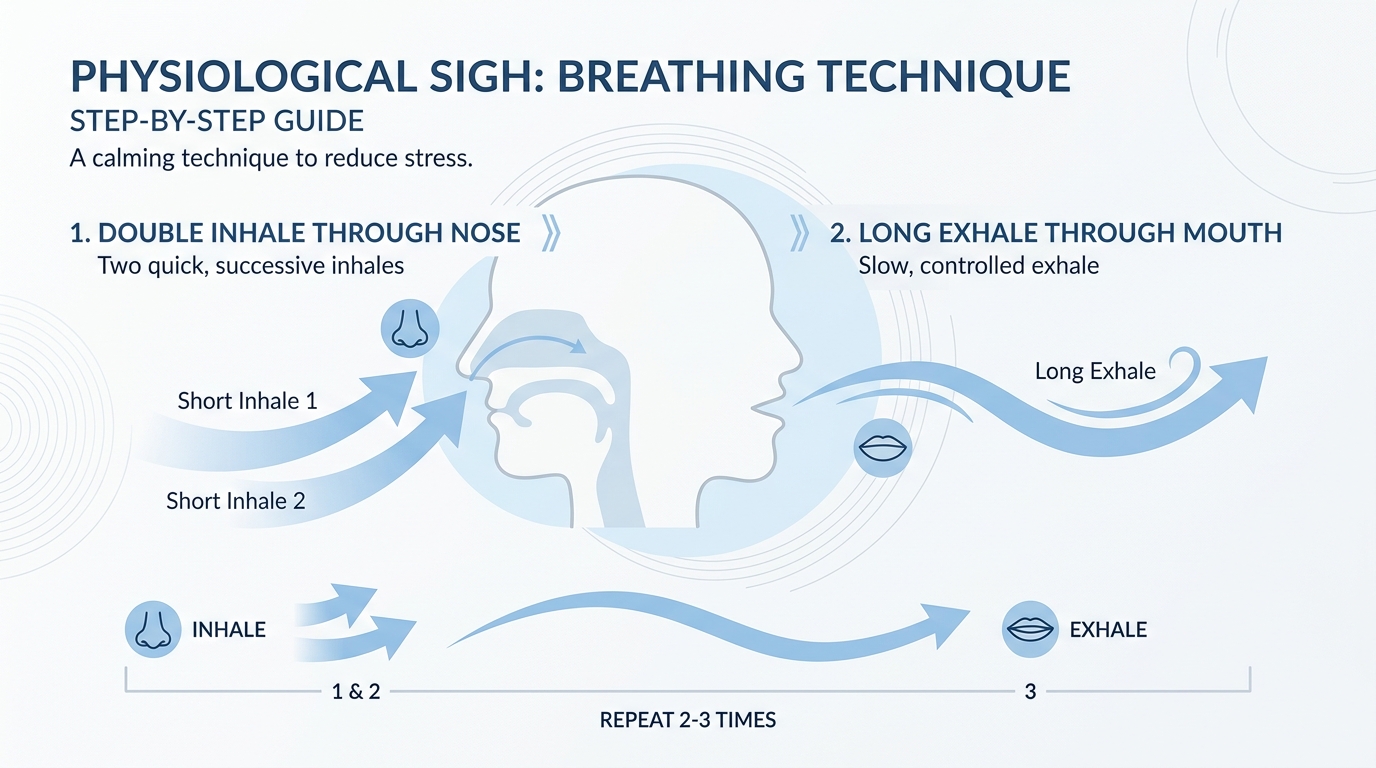 生理性叹息(Physiological Sigh):双吸气(通过鼻子)→ 长呼气(通过嘴巴)
冷静不是性格,是生存技能
Calm Is Not a Personality Trait — It's a Survival Skill
大多数人以为冷静是天生的——要么是焦虑型,要么是天生的佛系。但这完全错了。冷静是一项生存技能。 它可以被训练、被建立、被随时调用。
Most people think calm is something you're born with — either the anxious type or the easygoing type. But that's wrong. Calm is a survival skill. It can be built, trained, and deployed on demand.
核心洞察简单却难以做到:危机中,人们不跟随你的话语,而是镜像你的状态。 当整个房间都在恐慌时,保持冷静的人会成为事实上的领导者。不是因为他声音最大,而是因为他的神经系统成为了整个房间的稳定锚点。
The key insight is simple but hard: people in crisis don't follow your words — they mirror your state. When the room is panicking, the person who stays calm becomes the de facto leader. Not because they spoke the loudest, but because their nervous system became the room's anchor.
白熊问题 | The White Bear Problem
心理学家 Daniel Wegner 证明了一件反直觉的事:你越想压制一个想法,它就越支配你。告诉自己"别想白熊"——结果满脑子都是白熊。
Psychologist Daniel Wegner proved something counterintuitive: the harder you try to suppress a thought, the more it dominates. Tell yourself "don't think about a white bear" — and that's all you can think about.
这就是为什么"别慌"是危机中最差的建议。你的大脑抓住了"慌"这个词,然后开始慌了。
This is why "don't panic" is the worst advice during a crisis. Your brain grabs the word "panic" and runs with it.
压力存在的三个空间 | Three Spaces Where Pressure Lives
1. 刺激与反应之间 | Between Stimulus and Response
维克多·弗兰克尔在集中营中存活的核心:活在刺激与反应的间隙 Viktor Frankl survived the concentration camps by living in the gap between stimulus and response
实践 | Practice: 分离"发生在你身上的事"与"你接下来做什么"。Separate "what happens to you" from "what you do next."
2. 紧急与重要之间 | Between Urgent and Important
压力压缩时间的表现 | How pressure compresses time:
- 想立即反应 | Wanting to react immediately
- 容易打断别人 | Interrupting others
- 匆忙做决定 | Making rushed decisions
- 非黑即白思维 | Black-and-white thinking
- 过度反应 | Overreacting
实践 | Practice: 放慢反应速度,区分"感觉紧急"与"真正重要"。Slow down, distinguish "feels urgent" from "truly important."
3. 身份与结果之间 | Between Identity and Outcome
最难的间隙 | The hardest gap:
- 当自我 (ego) 与结果绑定 → 一切变得个人化
- 不同意见 = 不尊重 | Disagreement = disrespect
- 小缺陷 = 大失败 | Small flaw = major failure
UCLA 研究 | UCLA Research: 社会排斥激活大脑与身体疼痛相同的回路。Social rejection activates the same neural pathways as physical pain.
实践 | Practice: 分离"你是谁"与"发生什么"。Separate "who you are" from "what happened."
CALM 框架 | The CALM Framework
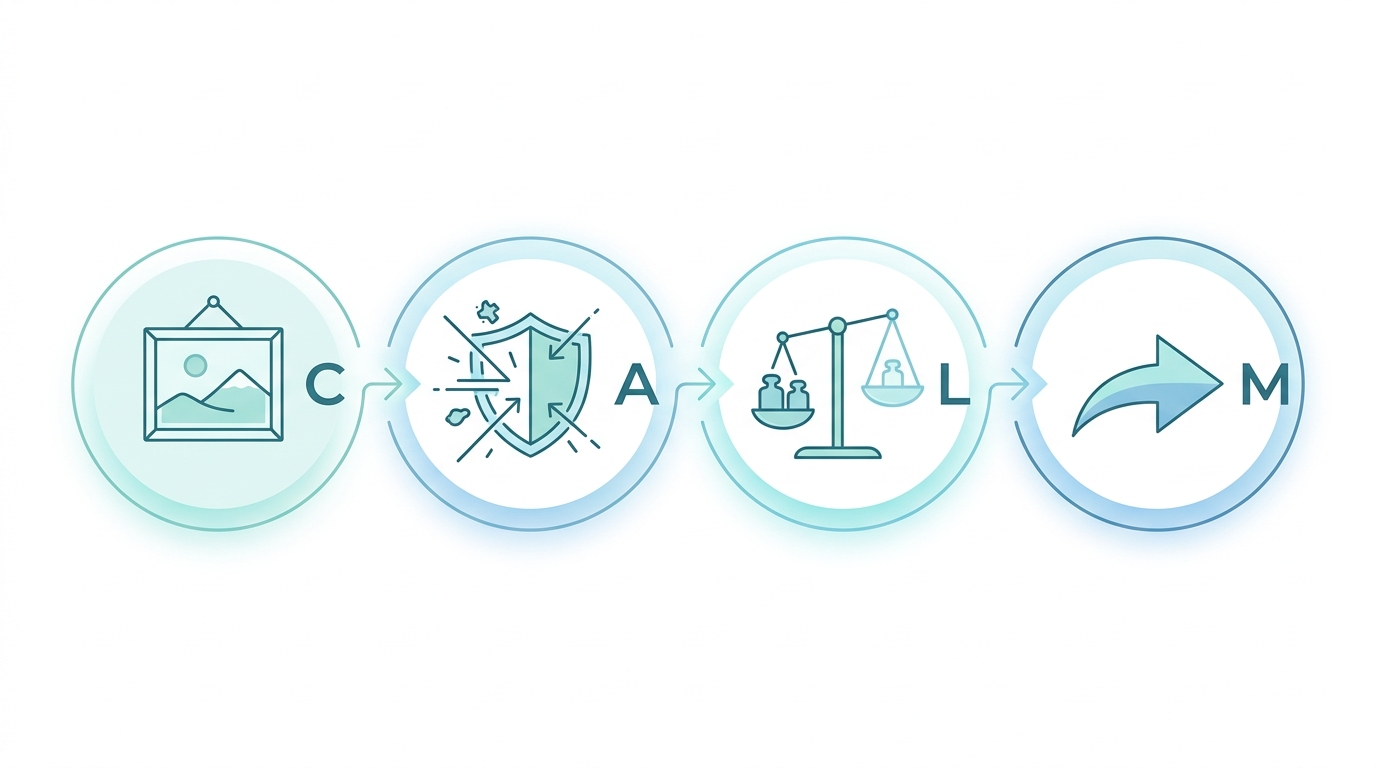 C: 控制框架 | A: 承受冲击 | L: 降低赌注 | M: 果断行动
| 字母 | 步骤 | 核心问题 | 具体做法 |
|---|---|---|---|
| C | Control the Frame<br>控制框架 | 这是什么游戏?真正的赌注是什么?<br>What's the real game? What's at stake? | 命名真正的赌注:这是真实威胁还是只是声音大?<br>Name the real stakes: is this a real threat or just loud? |
| A | Absorb the Hit<br>承受冲击 | — | 让冲击落地,不反击,重新定位。把声音看作物理声波,不是判决。<br>Let the impact land. Don't fight back. See noise as sound waves, not judgment. |
| L | Lower the Stakes<br>降低赌注 | 这是真实威胁吗?<br>Is this a real threat? | 提醒自己:这只是对话,不是熊在冲向你。<br>Remind yourself: this is a conversation, not a bear charging at you. |
| M | Move Decisively<br>果断行动 | 下一步清晰行动是什么?<br>What's the next clear action? | 一次清晰的行动,一句干净的话。<br>One clear action, one clean sentence. |
核心逻辑 | Core Logic: 像打网球 — 你发球后,球在对方场地,现在他们必须回应你的冷静。Like tennis — once you serve, the ball is in their court. Now they have to respond to your calm.
生理性叹息 | The Physiological Sigh
最快神经系统重置方法 | Fastest nervous system reset:
双吸气 (通过鼻子) → 长呼气 (通过嘴巴)
Double inhale (through nose) → Long exhale (through mouth)
原理 | How it works:
- 压力 → 呼吸变浅 → CO₂堆积 → 心率上升
- Pressure → shallow breathing → CO₂ buildup → heart rate rises
- 无法靠思考摆脱,但可以靠呼吸摆脱
- You can't think your way out of this, but you can breathe your way out
- 快速降低生理压力,触发压力反应降档
- Quickly lowers physiological arousal, triggers stress response downshift
经典案例 | Case Studies
萨利机长 (Captain Sully) — 哈德逊河迫降
Captain Sully — Hudson River Landing
情境 | Situation: 鸟击导致双引擎失效,飞机开始下坠。Bird strike disabled both engines, plane was falling.
关键行为 | Key Behavior:
- 撞击前 90 秒用平静的声音通过广播讲话
- Spoke calmly over the intercom 90 seconds before impact
- 没有颤抖、没有恐慌、没有隐藏的情绪
- No trembling, no panic, no hidden emotion
- 知道机舱会镜像他的状态
- Knew the cabin would mirror his state
结果 | Result: 155 人全部生还。All 155 people survived.
教训 | Lesson: Sully 先控制自己,再控制飞机 — 这个顺序至关重要。Sully controlled himself first, then the plane — the order matters.
沃伦·巴菲特 | Warren Buffett
情境 | Situation: 2008 年金融危机,市场暴跌。2008 financial crisis, market crashed.
行为 | Action: 在《纽约时报》写下"Bad news is an investor's best friend." Wrote "Bad news is an investor's best friend" in the NYT.
对比 | Contrast: 讲述者理解巴菲特的策略,但仍在市场底部卖出、顶部买回。The narrator understood Buffett's strategy but still sold at the bottom, bought at the top.
教训 | Lesson: 知道框架 ≠ 能在压力下执行框架。Knowing the framework ≠ executing it under pressure.
为什么现在比以往更难 | Why It's Harder Now
有两场现代风暴让冷静变得更难:
Two modern storms make calm harder:
1. 社交媒体风暴 | Social Media Storms
- 设计目的:让我们持续处于愤怒和焦虑状态
- Designed to keep us constantly angry and anxious
- 争议比冷静更有利可图
- Controversy is more profitable than calm
2. AI 风暴 | AI Storms
- 注入真实的恐惧、不确定性和怀疑
- Injects real fear, uncertainty, and doubt
- 关于工作的未来、工作的本质
- About the future of work, the nature of work
洞察 | Insight: 保持冷静现在比过去更难,但高绩效者学会保持专注。Staying calm is harder now than ever, but high performers learn to stay focused.
关键金句 | Key Quotes
"In a crisis, people don't follow your words, they mirror your state." (危机中,人们不跟随你的话语,而是镜像你的状态。)
"Calm isn't performed in the moment. It's built before the moment." (冷静不是当下表演出来的,而是在当下之前构建的。)
"Who can conquer the world? The one who conquers the mind." (谁能征服世界?征服内心的人。)
"Resilience isn't enduring storms. It's realizing the only storm that matters is the one raging inside of you." (韧性不是忍受风暴,而是意识到唯一重要的风暴是你内心的风暴。)
反思问题 | Reflection Questions
- 我现在正在保护什么自我 (ego)?<br>What ego am I protecting right now?
- 这个情况的真正赌注是什么?<br>What are the real stakes in this situation?
- 我是在回应 (respond) 还是反应 (react)?<br>Am I responding or reacting?
- 如果我把身份与结果解绑,我会怎么做?<br>If I untied my identity from the outcome, what would I do?
📺 原视频 | Original Video: Stay Calm Under Pressure — YouTube
Comments (0)
Login to leave a comment.