EUV 光刻胶中的光酸扩散:反应-扩散动力学的定量表征
Photoacid Diffusion in EUV Photoresists: Quantitative Characterization of Reaction-Diffusion Kinetics
论文来源 / Source: Kang S, Wu W-l, Choi K-W, De Silva A, Ober CK, Prabhu VM. Characterization of the Photoacid Diffusion Length and Reaction Kinetics in EUV Photoresists with IR Spectroscopy. Macromolecules 2010, 43, 4275–4286. DOI: 10.1021/ma902548a
作者机构 / Authors' Institutions: NIST(美国国家标准与技术研究院), Intel Corporation(英特尔), Cornell University(康奈尔大学)
作者 / Benjamin: 这篇论文对光刻胶研发很有参考价值,特别是光酸扩散长度(Ld)的定量测量方法,对我们理解化学放大胶(CAR)的反应动力学机制有重要启示。
1. 研究背景 / Background
EN: As semiconductor nodes shrink below 32nm, Extreme Ultraviolet (EUV) lithography at 13.5nm wavelength has become the leading candidate for next-generation chip manufacturing. The quality of patterned features depends critically on the photoacid diffusion length (Ld) — the distance a photoacid travels during the post-exposure bake (PEB) step. When Ld approaches or exceeds the critical dimension (CD) of the feature, image blur and line-edge roughness (LER) become unacceptable.
CN: 随着半导体节点缩小至 32nm 以下,13.5nm 波长的极紫外(EUV)光刻已成为下一代芯片制造的主流技术。图案化特征的质量关键取决于光酸扩散长度(Ld)——即光酸在后烘(PEB)步骤中移动的距离。当 Ld 接近或超过特征的关键尺寸(CD)时,图像模糊和线边缘粗糙度(LER)将变得无法接受。
The fundamental challenge: the photoacid diffusion length must be smaller than the feature size (Ld < CD). This requires precise characterization of reaction-diffusion kinetics.
核心挑战:光酸扩散长度必须小于特征尺寸(Ld < CD)。 这需要对反应-扩散动力学进行精确表征。
2. 两种模型光刻胶 / Two Model Photoresists
EN: The study compares two EUV photoresist architectures with chemically analogous structures:
- Polymer resist: P(HOSt-co-tBA) — poly(hydroxystyrene-co-tert-butyl acrylate), similar to commercial ESCAP resist. Mn = 11,460 g/mol, PDI = 1.8.
- Molecular glass (MG) resist: CM4R — tert-butoxycarbonyl (t-BOC) protected tetra-C-methylcalix[4]resorcinarene, a well-defined small-molecule architecture.
Both use the same photoacid generator (PAG): TPS-PFBS (triphenylsulfonium perfluorobutanesulfonate).
CN: 该研究对比了两种化学结构相似的 EUV 光刻胶架构:
- 聚合物光刻胶 P(HOSt-co-tBA) — 聚(对羟基苯乙烯-共-丙烯酸叔丁酯),类似于商用 ESCAP 光刻胶。Mn = 11,460 g/mol,PDI = 1.8。
- 分子玻璃(MG)光刻胶 CM4R — 叔丁氧羰基(t-BOC)保护的四-C-甲基杯[4]间苯二酚芳烃,一种明确的小分子架构。
两者使用相同的光酸产生剂(PAG):TPS-PFBS(三苯基锍全氟丁烷磺酸盐)。
3. 创新方法:软接触薄膜转移技术 / Novel Method: Soft-Contact Film Transfer
EN: The key innovation is a soft-contact film transfer technique using PDMS stamps to prepare bilayer films:
- Top layer: Resist + PAG (photoacid generator)
- Bottom layer: Resist only (no PAG)
- Interface width: 1-2 nm (measured by neutron reflectivity)
This approach solves two problems:
- One diffusion medium — both layers are the same resist, eliminating ambiguity about diffusion differences between different polymers.
- Sharp acid concentration gradient — PAG is confined to the top layer, creating a well-defined step profile for diffusion measurement.
CN: 核心创新是一种软接触薄膜转移技术,使用 PDMS 印章制备双层薄膜:
- 上层: 光刻胶 + PAG(光酸产生剂)
- 下层: 仅光刻胶(不含 PAG)
- 界面宽度: 1-2 nm(通过中子反射仪测量)
该方法解决了两个问题:
- 单一扩散介质 — 两层是同种光刻胶,消除了不同聚合物间扩散差异的不确定性。
- 尖锐的酸浓度梯度 — PAG 限制在上层,形成明确的阶跃分布,便于扩散测量。
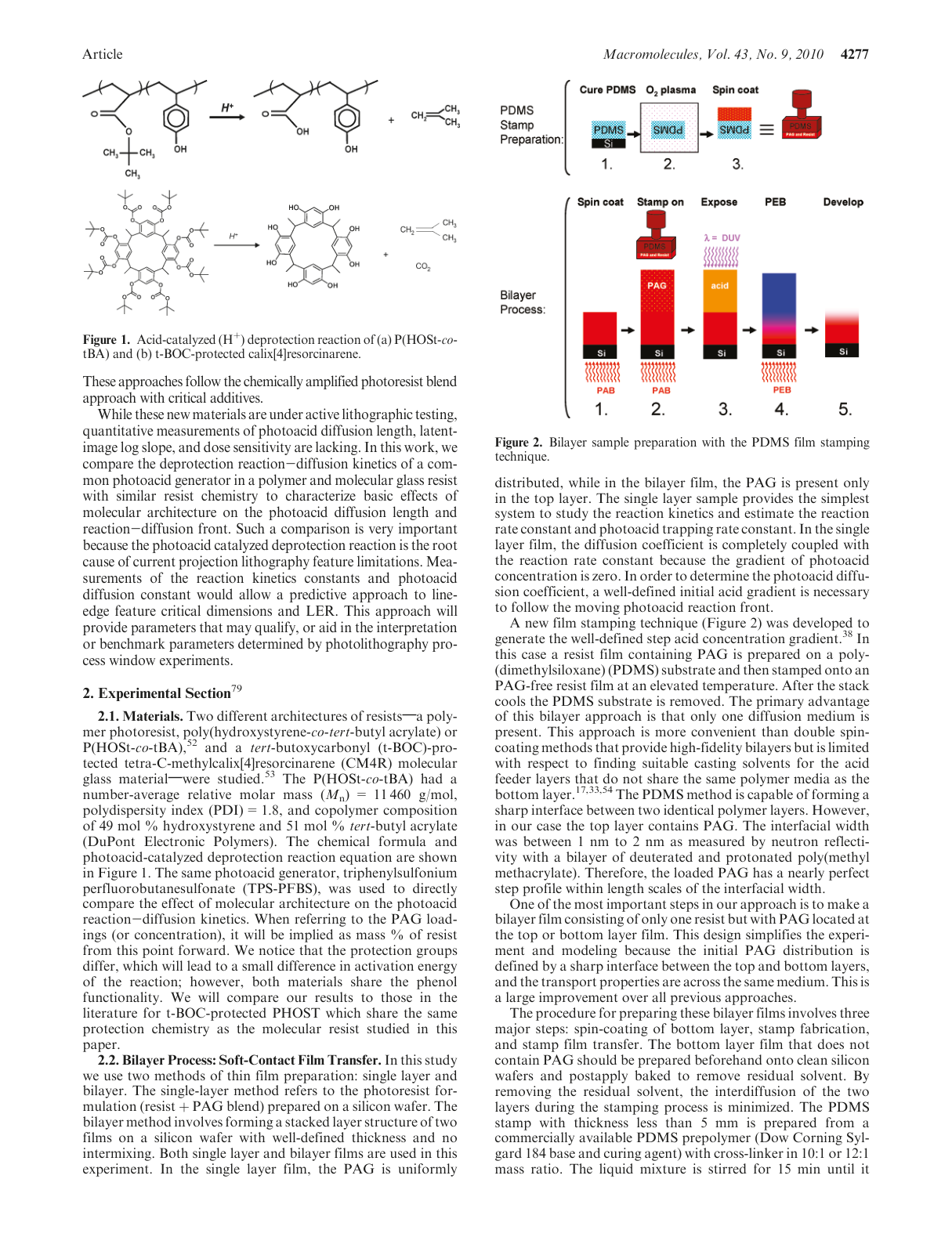
Figure 2: PDMS 印章法制备双层薄膜样品 / Bilayer sample preparation with PDMS stamping technique
4. 三参数动力学模型 / Three-Parameter Kinetics Model
EN: The reaction-diffusion process is modeled with three key parameters:
| Parameter | Symbol | Meaning |
|---|---|---|
| Reaction rate constant | k_P | Speed of the deprotection reaction |
| Photoacid trapping constant | k_T | Rate of photoacid deactivation by reaction products |
| Diffusion coefficient | D_H | Photoacid diffusion rate in the resist matrix |
The model combines Dill's equation for photoacid generation, a first-order reaction equation, and a Fickian diffusion equation with a trapping term:
$$\frac{d\varphi}{dt} = k_P H(1-\varphi)$$
$$\frac{\partial H}{\partial t} = D_H \nabla^2 H - k_T H \varphi$$
where φ is the deprotection level and H is the photoacid concentration.
CN: 反应-扩散过程用三个关键参数建模:
| 参数 | 符号 | 含义 |
|---|---|---|
| 反应速率常数 | k_P | 去保护反应的速度 |
| 光酸捕获常数 | k_T | 反应产物使光酸失活的速率 |
| 扩散系数 | D_H | 光酸在光刻胶基质中的扩散速率 |
模型结合了 Dill 方程(光酸产生)、一阶反应方程和含捕获项的 Fickian 扩散方程。
5. 关键发现 / Key Findings
5.1 分子玻璃的扩散系数更大 / MG Has Larger Diffusion Coefficient
EN: At the same PEB temperature, CM4R (molecular glass) shows systematically larger diffusion coefficients than P(HOSt-co-tBA) (polymer). However, CM4R also has a higher trapping rate, which ultimately leads to a shorter photoacid diffusion length.
Activation energies:
- P(HOSt-co-tBA): E_a = 127 ± 25 kJ/mol
- CM4R: E_a = 165 ± 23 kJ/mol
CN: 在相同 PEB 温度下,CM4R(分子玻璃)的扩散系数系统性大于 P(HOSt-co-tBA)(聚合物)。然而,CM4R 也具有更高的捕获速率,最终导致更短的光酸扩散长度。
活化能:
- P(HOSt-co-tBA):E_a = 127 ± 25 kJ/mol
- CM4R:E_a = 165 ± 23 kJ/mol
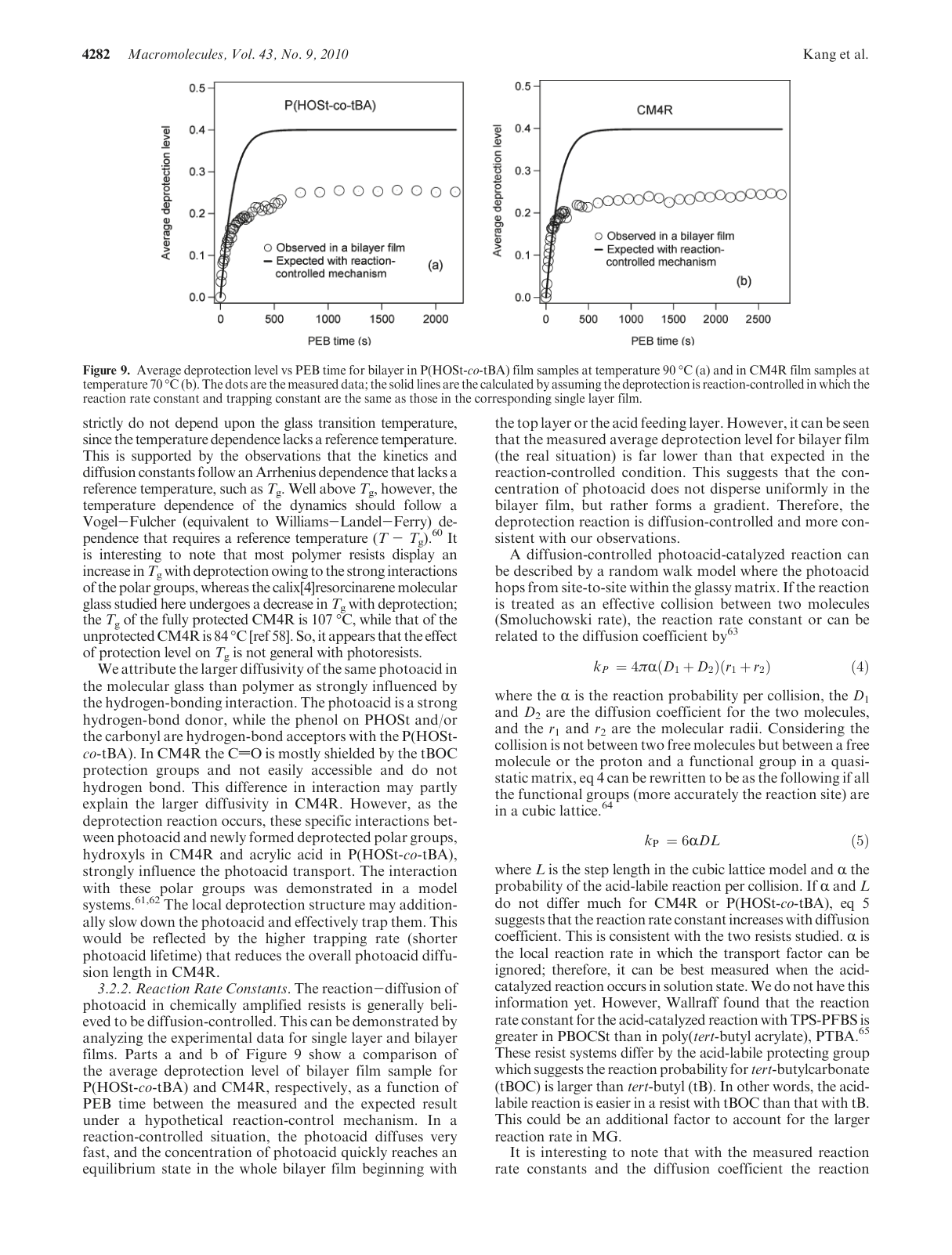
Figure 8: CM4R 与 P(HOSt-co-tBA) 的光酸扩散系数 Arrhenius 图 / Arrhenius plot of photoacid diffusion coefficients for CM4R vs P(HOSt-co-tBA)
5.2 光酸扩散长度不是简单的扩散函数 / Diffusion Length ≠ Simple Diffusion Function
EN: A critical insight: the photoacid diffusion length is not simply √(2Dt). Instead, it is determined by all three kinetic parameters jointly (k_P, k_T, D_H), plus the solubility switch deprotection level. This explains why CM4R — despite having higher D_H — has shorter Ld: the higher trapping rate k_T dominates.
CN: 一个关键洞察:光酸扩散长度不是简单的 √(2Dt)。相反,它由三个动力学参数共同决定(k_P, k_T, D_H),加上溶解度切换的去保护水平。这解释了为什么 CM4R —— 尽管具有更高的 D_H —— 却有更短的 Ld:更高的捕获速率 k_T 起了主导作用。
5.3 去保护反应是扩散控制的 / Deprotection Reaction is Diffusion-Controlled
EN: Experimental data shows the deprotection reaction is diffusion-controlled, not reaction-controlled. If it were reaction-controlled, the photoacid would distribute uniformly across the bilayer almost instantly. The measured deprotection levels are far lower than the hypothetical reaction-controlled case, confirming diffusion limitation.
Reaction probability per collision:
- P(HOSt-co-tBA): ~0.03 (1 reaction per 33 collisions)
- CM4R: ~0.05 (1 reaction per 20 collisions)
CN: 实验数据显示去保护反应是扩散控制的,而非反应控制的。如果是反应控制,光酸将几乎瞬间均匀分布在双层膜中。实测去保护水平远低于假设的反应控制情况,证实了扩散限制。
每次碰撞的反应概率:
- P(HOSt-co-tBA):~0.03(33 次碰撞中 1 次反应)
- CM4R:~0.05(20 次碰撞中 1 次反应)
5.4 光酸捕获机制 / Photoacid Trapping Mechanism
EN: The trapping process is phenomenological — photoacids are trapped by deprotection domains (hydrophilic regions formed by hydrogen-bonding aggregation), not by single moieties. This explains why the reaction stops at deprotection levels < 1, especially in single-layer films.
The trapping term (-k_T·H·φ) depends on both photoacid concentration AND deprotection level, capturing the physical reality that deprotection products create polar domains that immobilize photoacids.
CN: 捕获过程是现象学的——光酸被去保护域(由氢键聚集形成的亲水区域)捕获,而不是被单个基团捕获。这解释了为什么反应在去保护水平 < 1 时停止,尤其在单层膜中。
捕获项 (-k_T·H·φ) 同时依赖于光酸浓度和去保护水平,反映了去保护产物形成极性域从而固定光酸的物理现实。
6. 实验验证与扩散长度测量 / Experimental Validation & Diffusion Length Measurement
EN: The diffusion length was independently measured by developing the bilayer in aqueous hydroxide solution and measuring the etching depth — a model-free approach. The measured values agree well with model predictions using a single fitted solubility switch parameter, validating the kinetics model.
Key data at 90°C (30 min PEB):
- P(HOSt-co-tBA) measured Ld: ~35 nm
- CM4R measured Ld: ~25 nm
CN: 通过在氢氧化钠水溶液中显影双层膜并测量蚀刻深度,独立测量了扩散长度——一种无需模型的方法。测量值与使用单一拟合溶解度切换参数的模型预测值吻合良好,验证了动力学模型。
90°C 下的关键数据(30 min PEB):
- P(HOSt-co-tBA) 实测 Ld:~35 nm
- CM4R 实测 Ld:~25 nm
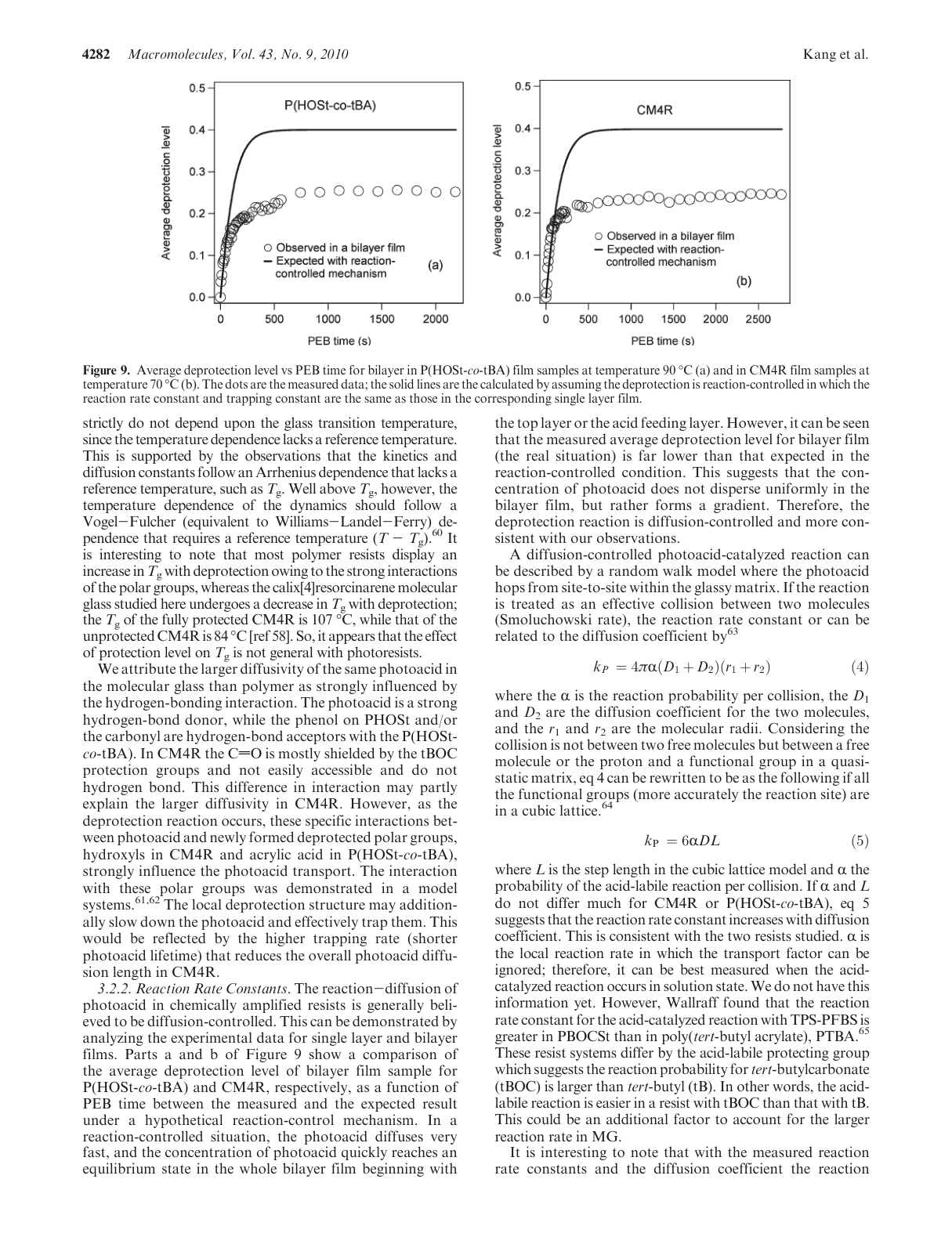
Figure 7: 单层与双层膜的相对去保护水平随 PEB 时间变化 / Relative deprotection level vs PEB time for single layer and bilayer
7. 对光刻胶研发的启示 / Implications for Photoresist R&D
EN: This work has direct relevance to modern EUV photoresist development:
- Molecular architecture matters — The choice between polymer and molecular glass architectures affects both diffusion and trapping, not just one parameter.
- Trapping is the hidden variable — Higher diffusion doesn't mean longer Ld if trapping rate is also higher.
- Quantitative characterization enables prediction — With measured k_P, k_T, and D_H, one can predict deprotection profiles φ(z) and estimate Ld without full lithographic testing.
- PEB temperature optimization — The Arrhenius dependence allows rational selection of PEB temperature to balance resolution and sensitivity.
- LER correlation — The latent-image log slope (LILS) at the solubility switch is directly correlated to LER, a key resolution metric.
CN: 这项工作对现代 EUV 光刻胶研发有直接意义:
- 分子架构至关重要 — 聚合物与分子玻璃架构的选择同时影响扩散和捕获,而不仅是单一参数。
- 捕获是隐藏变量 — 如果捕获速率也更高,更高的扩散并不意味着更长的 Ld。
- 定量表征实现预测 — 通过测量的 k_P、k_T 和 D_H,可以预测去保护分布 φ(z) 并估算 Ld,无需完整的光刻测试。
- PEB 温度优化 — Arrhenius 依赖关系允许理性选择 PEB 温度,以平衡分辨率和灵敏度。
- LER 相关性 — 溶解度切换处的潜像对数斜率(LILS)与 LER(关键分辨率指标)直接相关。
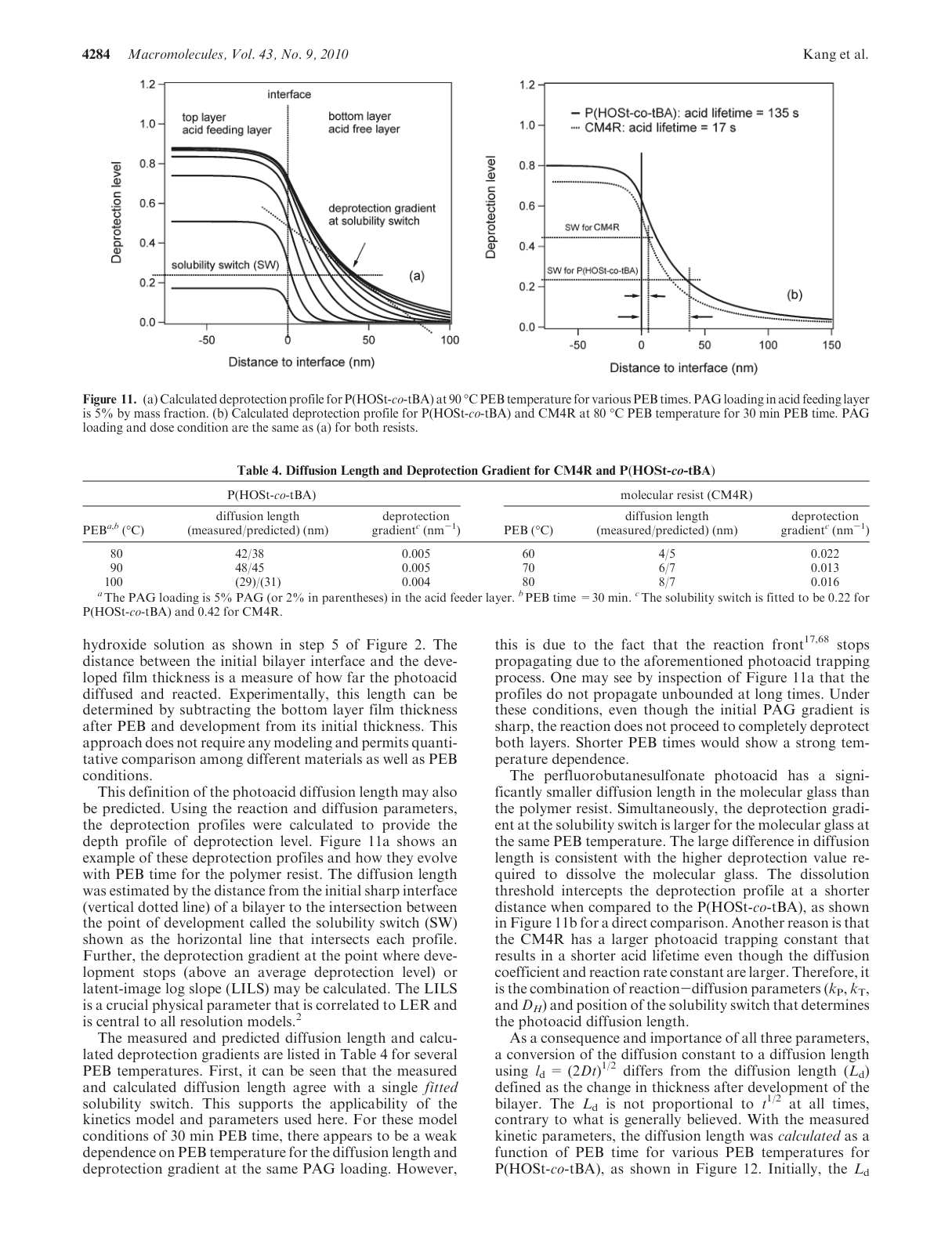
Figure 11: 聚合物光刻胶的去保护分布随 PEB 时间的演化 / Deprotection profiles evolution for polymer resist with PEB time
8. 核心数据表 / Key Data Tables
Reaction-Diffusion Parameters (90°C) / 反应-扩散参数
| Resist / 光刻胶 | k_P (nm³/s) | k_T (s⁻¹) | D_H (nm²/s) |
|---|---|---|---|
| P(HOSt-co-tBA) | 0.51 ± 0.06 | 0.028 ± 0.002 | 4.2 ± 0.3 |
| CM4R (70°C)* | 1.9 ± 0.2 | 0.13 ± 0.02 | 19 ± 3 |
*CM4R at 70°C; all parameters are higher at same temperature.
Activation Energies / 活化能
| Resist / 光刻胶 | D_H E_a (kJ/mol) |
|---|---|
| P(HOSt-co-tBA) | 127 ± 25 |
| CM4R | 165 ± 23 |
| PBOCSt (literature) | 153 |
9. 个人思考 / Personal Notes
CN: 作为从事光刻胶研发的人,这篇论文的方法论值得学习。特别是:
- 软接触薄膜转移法巧妙地解决了多层膜制备难题,为后续类似研究提供了标准方法
- 三参数模型虽然简化了物理过程,但实验验证结果令人信服
- 分子玻璃虽然扩散系数大,但由于捕获速率更高,最终扩散长度更短——这对我们选择材料架构有重要参考意义
- FTIR 原位测量方法相对容易复现,可以考虑在我们自己的实验室中尝试
这篇论文虽然是 2010 年的工作,但其核心方法和结论在今天 EUV 光刻胶研发中仍然适用。对于我们理解化学放大型光刻胶的反应动力学机制、优化配方设计、以及预测分辨率和 LER 性能都有重要价值。
EN: As someone working in photoresist R&D, this paper's methodology is worth studying. The soft-contact film transfer approach is elegant, the three-parameter model is validated by independent measurement, and the insight that molecular glass — despite higher diffusion — ends up with shorter Ld due to higher trapping is directly relevant to material architecture decisions.
While this is a 2010 paper, its core methods and conclusions remain applicable to today's EUV photoresist development. The FTIR in-situ measurement approach is relatively reproducible and worth considering for our own laboratory work.
10. 参考文献 / Selected References
- Ito H. Adv. Polym. Sci. 2005, 172, 37–245. (Chemically Amplified Resists review)
- Houle FA, et al. J. Vac. Sci. Technol. B 2002, 20(3), 924–931. (Reaction kinetics measurement)
- Vogt BD, et al. Macromolecules 2006, 39(24), 8311–8317. (Bilayer diffusion study)
- Lin EK, et al. Science 2002, 297, 372–375. (Neutron reflectivity study)
本文是对 NIST/Intel/Cornell 合作论文的学习笔记。原始论文版权归 ACS 所有。 This article is a study note on the NIST/Intel/Cornell collaboration paper. Original paper copyright belongs to ACS.
Comments (0)
Login to leave a comment.